Since the end of the 18th century in England, M. Wollstonecraft wrote the book and raised the banner of the liberal women's movement, feminism reflects various ideologies and interests to this day, and is an independent political ideology. This concept has been developed. Traditional philosophy and ideologies did not seriously reflect women's interests, identities, and interests. In addition, women have been discriminated against and suppressed by dismissing the way women exist, think, and act as inferior to that of men. Feminists have contributed to the construction of a democratic society where women's freedom and dignity are respected by resisting this masculine way of thinking and system.
Feminism is a complex political ideology that encompasses various positions that even conflict. Liberal feminism argues that women should have equal educational and career choices as men because women have the same rights. Marxist feminism believes that women can enjoy equal status with men only if they are largely incorporated into the working class and socialized by domestic work and childrearing. Radical feminists insist that sexual factors such as childbirth and parenting should be considered as the main culprit behind women's servitude and that patriarchal culture and families should be dismantled.
Psychoanalytic feminists also analyze the experiences of childhood that made others considerate before themselves make women subordinate. They think that the strength of women who can build deep relationships with others is their greatest weakness. It means that they are trained to take the needs of men first, rather than their needs and desires, and are willing to assume a “willing” subordinate position. And postmodern feminism rejects the traditional philosophy of pursuing a single truth and theory and welcomes the coexistence of various voices within feminism.
Despite this internal diversity, feminism has some degree of unity in that it reveals the various ways in which women are discriminated against and oppressed because they are women, and explores the desirable order in which women can enjoy equal justice, freedom, and equality with men. They have the various positions within feminism reflect different perceptions and assessments of the main causes and structures of women's discrimination, and most feminists embody the values of human dignity in bisexual relationships, a democracy that allows men and women to mutually respect and coexist. We gather our will to build a society.
Incel is an abbreviation for involuntary celibate in English, which is a man who wants to have a relationship with a woman but cannot.
Incel is one of the various trends within the male movement, looking at the relationship between the opposite sex from the perspective of male supremacy. According to them, sexual intercourse is a right given to men, and a woman's refusal is a violation of the basic rights of men. Women's right to self-determination is an impure idea that violates men's rights. Hence, the hate of women who have rejected themselves is a natural consequence of this movement.
If there is a male movement needed in this era, it will be a movement that resists the ideology that forces dichotomous masculinity. There is a need for the movement against confining men to restricted sex roles and gender regulations. Obviously, the men's movement aimed at feminism as an enemy does not help men. Man's dignity will be preserved when fighting with women for a world without gender discrimination against all oppression, including the oppression of women.
Wednesday, May 6, 2020

Sunday, May 3, 2020
Post No. 8
For me personally, my favorite two guest lectures were Mary Stegmaier and Peter Motavalli. Starting with Mary Stegmaier, it was very interesting to hear her talk about her time as an intern for a company in Barcelona. This was due to the fact that I myself had actually studied abroad in Spain just the semester before albeit in a different city; Seville. Her experience and mine could not be more different even though were in the same country in a couple of its biggest cities. She was in the North of Spain, in Catalonia, which is more akin to the rest of northern and western European culture whereas I was living in Andalusia, the southernmost region of Spain which is more similar to Mediterranean culture and very laid back. She described her experience there as sounding very formal and business oriented, which sounds about right for the North of Spain. My experience was very relaxing; people walked slow, businesses operated whenever they chose to, and there were no hard deadlines for anything. For me, this really shows how remarkably different the the cultures of different regions can be within a country can be despite being being only hours apart.
Peter Movalli's lecture about the indigenous community he became close with in rural British Columbia, Canada was especially eye-opening to me. To me, it seemed like despite being a white man from, the midwest, he was able to successfully immerse himself in a culture that couldn't be more different from his own simply by trying to live among them and understand them for his own research purposes. When they discovered the remains of a long dead tribal member in under the shore of the lake, it seemed like something out of a movie. It is crazy to me how much we can learn about the past through archaeology. The thing that stood out most to me, however, were the burial traditions of the locals. What they did with the remains of the tribal members in order to get to their version of the afterlife is something that would be considered desecration in the Irish Roman Catholic culture I was raised in, but to me it seemed so beautiful and respectful.
I initially picked Panama just because I knew it was in Central America due to the Panama Canal. There was literally nothing else I remembered about the country other than my eighth grade social studies teacher telling us that when the CIA was trying to capture Manuel Noriega, they blasted "Panama" by Van Halen at a high volume outside of his compound for days until he finally came out to be arrested. What I actually learned was a long pattern of American interference in the Central American nation going back over a hundred years. What I also learned about was the treatment of the indigenous people by the government, which isn't great. I also learned a much more in depth history of the country's defining feature, the Canal. All I really knew about the Canal was what my grandpa told me family when he was stationed there during his Navy years. The conflict over the ownership of the Panama Canal between the United States and Panama is representative of more than just the Canal, but over the ideals of self determination in a country that has been subject to foreign interference for much of its history.
Post No. 4
It has become evident that we are in the midst of a climate crisis. At the moment, our planet is facing numerous threats, including but not limited to air pollution, water pollution, illegal dumping, light pollution, soil pollution, and noise pollution. All of these effect the environment in a major way. Air pollution is the biggest problem we are facing right now. Cars, factories, and several other factories have led to our air quality being reduced, holes being put in the ozone layer, and the overall warming of the globe which leads to its own slew of problems such as the melting of the polar ice caps and climate change.
Just a couple weeks ago our class discussed the inevitable flooding of the nation of Kiribati, an island archipelago in the middle of the Pacific Ocean that is slowly being swallowed up by the rising waters. Likewise, we are starting to experience more hurricanes and other forms of natural disasters than ever before. Illegal dumping in the oceans has also caused a marked decrease in marine life, as many of the ocean's animals struggle to hunt for prey in an increasingly polluted natural habitat. In the Pacific Ocean there also exists two massive garbage clumps, a result of America and Asia's pollution converging in the ocean. They are each roughly the size of the State of Texas and early impossible to clean up. Obviously, it is difficult to regulate this on a local scale, so it is impossible to heal the planet on a global scale. Despite guidelines and regulations from the United Nations, the countries that do the most polluting in the world have zero obligation to follow them. There are no consequences for disobeying pollution regulations and even if there were, for example, financial punitive measures such as embargoes or fines, the companies and countries that are committing the pollution would almost certainly rather just accept their punishment and continue dumping. China, for example, is the world's largest polluter. They produce pretty much everything in the world, so it is no surprise that they also produce the most material waste. Their factories also produce an enormous amount of smog. In fact, more than 50% of the air pollution, or smog in the San Francisco Bay Area is actually air pollution that comes directly from Chinese factories.
In America, the federal government is essentially just turning a blind eye towards pollution. Upon taking office in 2017, President Donald Trump chose a cabinet comprised of climate change deniers. Trump, along with many other top Republican officials around the country insist that the idea of climate change is a hoax created by the Democratic Party to hurt American businesses. He selected Scott Pruitt as head of the Environmental Protection Agency. Pruitt himself claims that climate change is a hoax and has actually sued the EPA over a dozen times as a lobbyist for the fossil fuel industry.
In order for the world to actually come together to defeat climate change, there has to actually be serious consequence for companies and countries who continue to ravage the planet instead of simple slaps on the wrist. Likewise, there ought to be financial incentives for countries to want to be more green.
In Panama, the issue with pollution is very serious as a country that relies heavily upon the sea for nearly all of its industry. The only real business enterprises outside of the oceans are the fact that the nation is a tax haven. A few years ago, Greenpeace launched a campaign to help save the whales in Panama. On nearly every block of Panama city in 2014, there were murals, billboards, and street art celebrating whales and raising awareness of ocean pollution, something the Panamanian government has been guilty of in the past.
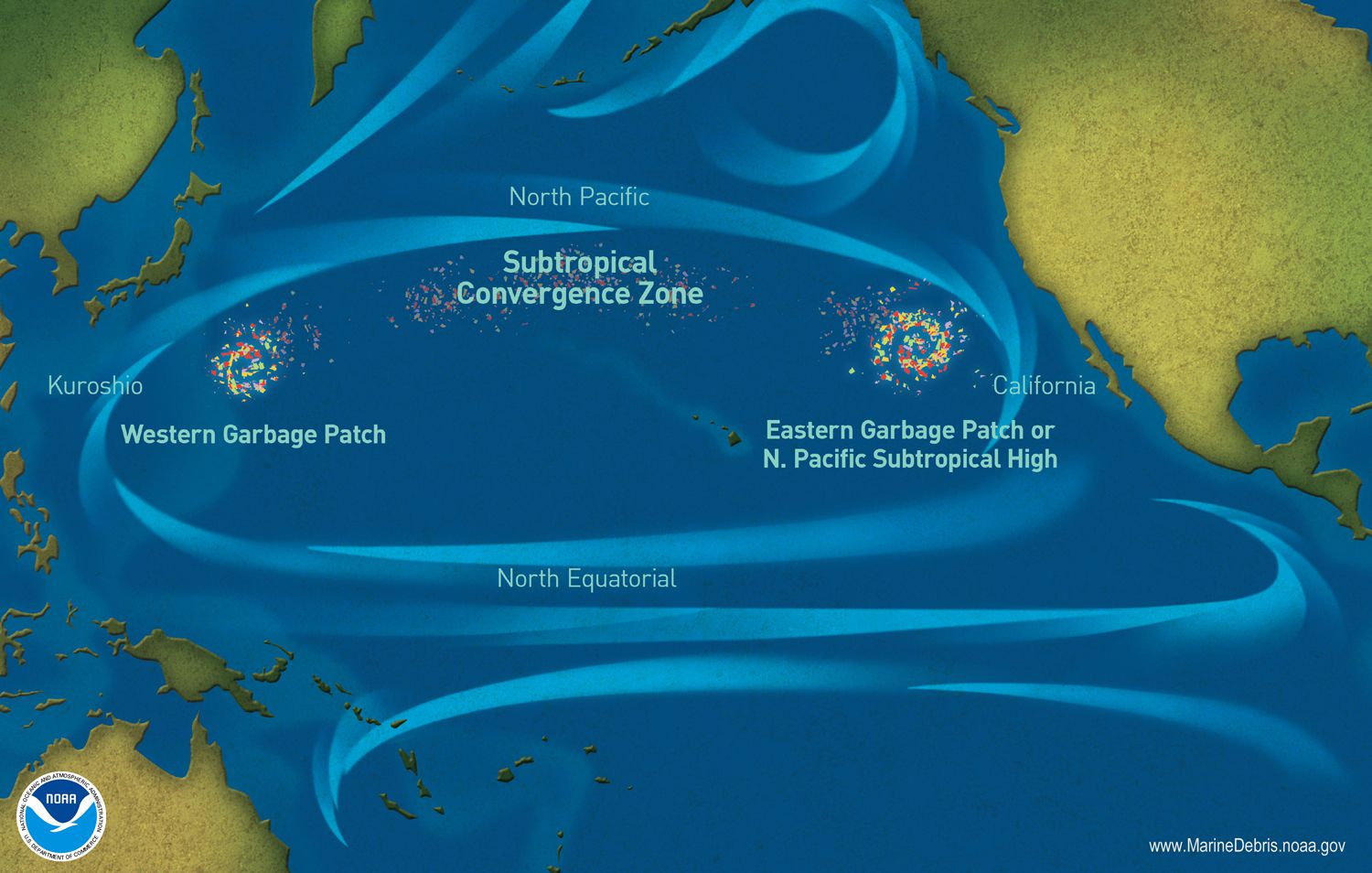
Just a couple weeks ago our class discussed the inevitable flooding of the nation of Kiribati, an island archipelago in the middle of the Pacific Ocean that is slowly being swallowed up by the rising waters. Likewise, we are starting to experience more hurricanes and other forms of natural disasters than ever before. Illegal dumping in the oceans has also caused a marked decrease in marine life, as many of the ocean's animals struggle to hunt for prey in an increasingly polluted natural habitat. In the Pacific Ocean there also exists two massive garbage clumps, a result of America and Asia's pollution converging in the ocean. They are each roughly the size of the State of Texas and early impossible to clean up. Obviously, it is difficult to regulate this on a local scale, so it is impossible to heal the planet on a global scale. Despite guidelines and regulations from the United Nations, the countries that do the most polluting in the world have zero obligation to follow them. There are no consequences for disobeying pollution regulations and even if there were, for example, financial punitive measures such as embargoes or fines, the companies and countries that are committing the pollution would almost certainly rather just accept their punishment and continue dumping. China, for example, is the world's largest polluter. They produce pretty much everything in the world, so it is no surprise that they also produce the most material waste. Their factories also produce an enormous amount of smog. In fact, more than 50% of the air pollution, or smog in the San Francisco Bay Area is actually air pollution that comes directly from Chinese factories.
In America, the federal government is essentially just turning a blind eye towards pollution. Upon taking office in 2017, President Donald Trump chose a cabinet comprised of climate change deniers. Trump, along with many other top Republican officials around the country insist that the idea of climate change is a hoax created by the Democratic Party to hurt American businesses. He selected Scott Pruitt as head of the Environmental Protection Agency. Pruitt himself claims that climate change is a hoax and has actually sued the EPA over a dozen times as a lobbyist for the fossil fuel industry.
In order for the world to actually come together to defeat climate change, there has to actually be serious consequence for companies and countries who continue to ravage the planet instead of simple slaps on the wrist. Likewise, there ought to be financial incentives for countries to want to be more green.
In Panama, the issue with pollution is very serious as a country that relies heavily upon the sea for nearly all of its industry. The only real business enterprises outside of the oceans are the fact that the nation is a tax haven. A few years ago, Greenpeace launched a campaign to help save the whales in Panama. On nearly every block of Panama city in 2014, there were murals, billboards, and street art celebrating whales and raising awareness of ocean pollution, something the Panamanian government has been guilty of in the past.
BLOG Post #4 due Sunday, 3/1
Read on Canvas-On Sustainability-Moral Ground-Watt-Cloutier (pp. 25-29).
- Assuming we all agree that we have a moral obligation to take action to protect the future of a planet in peril, what should these actions look like? What is being done by world leaders? Is there consensus?
- Are any other environmental groups working in your region? What is Greenpeace doing in your region?
- Larsen talk:
For many Indigenous societies, places have “agency.” (The etymology of the word “Indigenous” means “to be of a place.”) Places have power and personality. They can speak, create, and teach. Places are sometimes seen as Elders from deep in totemic genealogies through which humans and nonhumans are related.
How would Larsen respond to the claim that a place has agency? Why?
How do you understand that concept?
Friday, May 1, 2020
Post No. 3
Like many western nations at the moment, Panama is currently experiencing a surge in nationalist sentiments. Nationalism, according to the dictionary is "identification with one's own nation and support for its interests, especially to the exclusion or detriment of the interests of other nations." In certain countries, "nationalism" is an understatement. Unlike many other countries, however, the sentiment of nationalism is nothing new is Panama. The interference of many foreign countries in Panama's history has led to a sense of distrust and dislike towards many other countries, especially the United States. France was the first nation to begin constructing the famous Panama Canal in the late nineteenth century, immediately followed by Colombia. The United States, fresh off of a victory against Spain after the Spanish American War Since the erection of the Panama Canal by the United States in 1914, there has been an underlying sense of hostility from many Panamanians towards the United States government.
The United States, having constructed the Panama Canal, enjoyed the benefits of it more than Panama, the original owner of the land as the land was declared legally United States territory. The animosity between the two nations over the issue of the Panama Canal came to a head for the first time in 1956 after then President of Egypt, Gamal Abdel Nasser, nationalized the waterway, taking the ownership away from France and England for the first time in nearly one hundred years and causing an international crisis. France and England, not willing to be humiliated by Nasser, invaded Egypt with their local ally Israel, who was more than willing to go to war with their Arabic neighbor. Facing intense pressure from the United States and Soviet Russia, France, England, and Israel were forced to withdraw. Following the Suez Canal Crisis, a conference was called in which Egypt emerged victorious. As the Suez and Panama Canal are often compared, the victory for self-determination by the Egyptians gave the Panamanians hope. These hopes, however, would continue to be squandered by both the United States and Panamanian governments for years to come.
" The Egyptian nationalization of the Suez Canal in 1956 raised new hopes in the republic, because the two canals were frequently compared in the world press. Despite Panama's large maritime fleet (the sixth greatest in the world), Britain and the United States did not invite Panama to a special conference of the major world maritime powers in London to discuss Suez. Expressing resentment, Panama joined the communist and neutral nations in a rival Suez proposal.
United States secretary of state John Foster Dulles's unqualified statement on the Suez issue on September 28, 1956 — that the United States did not fear similar nationalization of the Panama Canal because the United States possessed "rights of sovereignty" there — worsened matters."
Panama would not receive ownership of the Panama Canal until December 31st, 1999.
Inequality still remains to be a major issue in Panama, however the situation has improved a great deal in recent years. Despite past economic hardship, the economy of Panama has done well in the last couple decades, primarily due to their highly international economy. In conjunction with their ownership of the panama canal, many businesses are based in Panama City due to its reputation as a tax haven.
"In the last 25 years, Panama has witnessed the highest economic growth in Latin America and foresees a prosperous future. However, analysts at the International Monetary Fund point out a problem in the country: there is inequality. The evidence confirms that it is not necessarily a problem because inequality is not synonymous with poverty."
"In 2010, 22% of the population of Panama was poor. The figure dropped to 13% in 2018, and the trend continues. In the last four years, 150,000 citizens have come out of poverty amid the arrival of 94,000 Venezuelan migrants in a country that has four million inhabitants."
Panama has a GINI index of 49.2. For Comparison, the United States has a GINI index of 34.8. While the country still has its fair share of inequality, they have been pretty successful economically since their acquisition of the Panama Canal in 1999.
The United States, having constructed the Panama Canal, enjoyed the benefits of it more than Panama, the original owner of the land as the land was declared legally United States territory. The animosity between the two nations over the issue of the Panama Canal came to a head for the first time in 1956 after then President of Egypt, Gamal Abdel Nasser, nationalized the waterway, taking the ownership away from France and England for the first time in nearly one hundred years and causing an international crisis. France and England, not willing to be humiliated by Nasser, invaded Egypt with their local ally Israel, who was more than willing to go to war with their Arabic neighbor. Facing intense pressure from the United States and Soviet Russia, France, England, and Israel were forced to withdraw. Following the Suez Canal Crisis, a conference was called in which Egypt emerged victorious. As the Suez and Panama Canal are often compared, the victory for self-determination by the Egyptians gave the Panamanians hope. These hopes, however, would continue to be squandered by both the United States and Panamanian governments for years to come.
" The Egyptian nationalization of the Suez Canal in 1956 raised new hopes in the republic, because the two canals were frequently compared in the world press. Despite Panama's large maritime fleet (the sixth greatest in the world), Britain and the United States did not invite Panama to a special conference of the major world maritime powers in London to discuss Suez. Expressing resentment, Panama joined the communist and neutral nations in a rival Suez proposal.
United States secretary of state John Foster Dulles's unqualified statement on the Suez issue on September 28, 1956 — that the United States did not fear similar nationalization of the Panama Canal because the United States possessed "rights of sovereignty" there — worsened matters."
Panama would not receive ownership of the Panama Canal until December 31st, 1999.
Inequality still remains to be a major issue in Panama, however the situation has improved a great deal in recent years. Despite past economic hardship, the economy of Panama has done well in the last couple decades, primarily due to their highly international economy. In conjunction with their ownership of the panama canal, many businesses are based in Panama City due to its reputation as a tax haven.
"In the last 25 years, Panama has witnessed the highest economic growth in Latin America and foresees a prosperous future. However, analysts at the International Monetary Fund point out a problem in the country: there is inequality. The evidence confirms that it is not necessarily a problem because inequality is not synonymous with poverty."
"In 2010, 22% of the population of Panama was poor. The figure dropped to 13% in 2018, and the trend continues. In the last four years, 150,000 citizens have come out of poverty amid the arrival of 94,000 Venezuelan migrants in a country that has four million inhabitants."
Panama has a GINI index of 49.2. For Comparison, the United States has a GINI index of 34.8. While the country still has its fair share of inequality, they have been pretty successful economically since their acquisition of the Panama Canal in 1999.
Subscribe to:
Comments (Atom)