Another Person Contracts Amebic Meningitis After Visiting Costa Rica Hot Springs
After a case last month of a 15 year old dying from amebic meningitis following a visit to the hot springs, another case has been reported.This week, a 4 year old girl was hospitalized after contracting the virus. The health ministry says the girl also visited the hot springs in the the Alajuela province. The University of Costa Rica (UCR) has said that there is definitely signs of Naegleria fowleri microscopic amoeba, which causes primary amebic meningoencephalitis (PAM), in the hot springs of Bagaces, Guanacaste. According to the United States Centers for disease Control "Once the ameba enters the nose, it travels to the brain where it causes primary amebic meningoencephalitis (PAM), which is usually fatal.” Tjat is obviously not a good sign for the 4 year old or anyone looking to visit those hot springs. It is currently impossible to tell how infected the water truly is but the Center for Disease Control is working on it.
Costa Rica Seizes over 5 tons of Cocaine
The police in Costa Rica captured over 5 tons of cocaine that was on its way to Rotterdam in the Netherlands. This is officially the largest drub bus in the history of Costa Rica. They found the cocaine hidden in a shipping container filled with decorative plants. The police discovered it dispersed between 202 small bags that were produced in "South America." The driver who took the shipment north of the country was detained.
Sunday, February 16, 2020

Post #3
Nationalism
emphasizes the communal ideology of the state and is the caution and assertion
aiming for its unification, independence, and development. It was taught to
people around the world in positive values throughout WW I and WW II, and the
rubble remains all over the world.
However,
some experts, such as Zakaria, point to the dangers by arguing the shortcomings
of such nationalism. Zakaria wrote in his book “The post-American world” how he
thinks of nationalism. He claimed that “As a number of players increases and each
one’s power and confidence grows, the prospects for agreement and common action
diminish,” (34). He argues that nationalism will hinder the formation of a new
community these days when globalization is on the rise.
He
cited a dialogue with the Chinese, for example, while he met Chinese in
Shangai. While responding with common sense, the Chinese reacted unreasonably in
the dialogue about Taiwan and Japan. (35) It is argued that even in normal
judgment, people with strong nationalism will not be able to make proper value
judgments about their country, which will be an unstable factor of
globalization.
Puerto
Rico, like other islands in the Caribbean, was originally the home of Tiano
natives but changed its fate when Columbus arrived on the island during the
second voyage in 1493. After that he Puerto Rica spend 400 years in a Spanish
colony and was controlled by the United States after American troops landed in
1898.
Spain’s
Puerto Rico colonial policy was followed by the conquests and looting that
Spain carried out in general. Infuriated by barbaric colonial rule, the
indigenous people rioted against the early conquerors of the colony but failed
to expel the colonists, sneaking into the mountainous regions to develop a
persistent struggle. In 1514, Puerto Rico, unlike other colonies, gave measures
to allow marriage between white and indigenous people, whose purpose was to
promote the settlement of gold miners who flocked to the population, the spread
of Christianity, and the discovery of gold mines at that time. As a result of
this policy, ethnic conflicts in other colonies have not been raised in Puerto
Rico.

Only in
the late 1800s did the conflict begin as the U.S. occupied the country. Puerto
Rico’s ethnic conflict is sharply divided into the pros and cons of whether to
join the United States. This phenomenon is a deep-rooted battle that spreads
through Puerto Rico, from politics to individual conflicts.
Puerto
Rico’s mood is on the decline of nationalists, with only 1% support for
independence, which was strong in the 1950s. The ruling party is claiming to
have autonomy as it is today, and the opposition party is claiming to be a
state in the United States.

The
ruling party and their supporters insisted that its current position in Puerto
Rico is closely related to the United States and that economic benefits can
gain. The ruling party’s governor, Rafael Hernandez, maintains that he
maintains this tradition of the Hispanic world and continues to take advantage
of the economic benefits gained from the special status of the United States.
It is
also argued that incorporating a state in the United States sells the country
because residents have to pay income taxes and U.S. companies that don’t
receive tax exemptions are reluctant to invest.
Rafel Hernandez
Puerto Rico’s economy has a high GDP per capita of
$24k, and the major industries are pharmaceutical and electronics manufacturing
bases, but the gap between the rich and the poor has a high GINI coefficient.
How to declare Puerto Rico’s economy is ruined.
The
Gini coefficient is 0.54 in 2019, about 0.05 higher than the U.S. Quite high. It
is startling that Puerto Rico has a GINI coefficient. 57The the gap between the rich and the poor is enormous, although the Caribbean is not an
economically poor area (except Haiti) but a narrow island.
The Puerto Rican government provides tax and other
benefits to finance a small number of investors. Rather than tightening their
debts, they use hedge funds or financial investors with large investments.
Puerto Rico has established a tax exemption policy for
investors and billionaires at Wall Street in the U.S. to raise large sums of
money from 2012. As a result, Wall Street’s private investors and U.S. super-riches
have often seen migration or investment in Puerto Rico for the purpose of
escaping the economy. Experts point out that Puerto Rico’s policies promote the
gap between rich and poor rather than improving national finances. Residents
are struggling with taxation and fiscal austerity, and they explain that the
government only deals with financial investors.
Source = https://datausa.io/profile/geo/puerto-rico/
https://revista.drclas.harvard.edu/book/inequality-puerto-rico
Saturday, February 15, 2020
Post #3
Nationalization is the weaponized form of patriotism. While patriotism is the love and pride for one's country (expressed through culture and personal identity), nationalism convinces that non-nationals and minorities are to blame for problems in the country. There is a dangerous line crossed once patriotism turns into nationalism, as we’ve seen with Nazi Germany. The Nationalist Republican Alliance became the ruling party in El Salvador with its 1988 electoral victory and since has held a lot of power within the El Salvador government. Zekaria feels that recently, nation-states have become increasingly “less willing to come together to solve common problems.” (Zekaria, pg34) He talks about his conversation with a chinese businessman that represented the “consummate product of globalization.” (Zekaria, pg35 He knew all about American pop culture, and spoke of it with interest, but when the conversation shifted to Taiwan, Japan, and the United States, “his responses were filled with bile.” (Zekaria, pg35) He felt that because Taiwan was trying to claim independence, China should invade it. He said that Japan should never be trusted as they are an “aggressor nation.” Zekaria was getting the sense this man was thoroughly modern and also thoroughly nationalist. He sees the danger is how the rest of the world feels about world history mainly being written in the American perspective, and that could lead to nationalist views toward other countries and non-nationalist minorities in their countries. El Salvador has always had a history of violence and discrimination against indiginous peoples. In 2010, President Mauricio Funes apologized on behalf of the government for the persecution and mass killing that indiginous people have had to endure in the country. Even though in 2014, El Salvador made an amendment to the Constitution to include recognition of indigious peoples, “no official public policies or laws have been implemented in order to progress implementation.” (Minority Rights Group International)
Inequality is a huge problem in El Salvador. There is a significant level of gender inequality found in all areas of life like employment, health, education, political participation, and family life. It has gotten a little better since the end of the civil war in 1992, but gender inequality is still blatantly apparent. Though gender inequality is still prevalent, there has been a moderate poverty reduction. Extreme poverty has declined from 15 percent to 8.5 percent. The public debt is enormous in the country. The current GINI index for El Salvador was 38.00 as of 2017. Which is not the best but also not as bad as some countries in Central America like Honduras. This means there is a significant wealth gap between the countries wealthiest households vs the countries poorest households.
Minorities and indigenous people are seen with little regard in El Salvador. Like I mentioned before, the constitution has been amended to include indiginous people but no public policies have come about, so the public really doesn't care about them. The indigenous people have been pretty much exterminated throughout El Salvador history. I believe indigenous people have been targeted all around the world due to their culture. I think in the public’s eye, their traditions of dancing and rituals that heal the earth are seen as savage-like, so they are not treated as humans. Societies a habit of domesticating everything they can, and reducing them to as object-like as possible for their own advantage, like taking the land the indigenous people possess.

Tuesday, February 11, 2020
Post #2
LANGUAGE
In Honduras, there are ten languages spoken. The official language of Honduras is Spanish. From Guatemala and Mexico, the Maya arrived in what is known today as Honduras. They were one of the many native groups originally in Honduras before the Europeans started exploring the Americas. On August 14, 1502, Europeans set foot for the first time on this land. On his fourth trip to the Americas, Columbus found this new land and named it Honduras which when translated means "depths" because of the deep waters there. In the 1530's, the spanish kept trying to invade Honduras because of the gold and silver that was found in its terrain. In 1537, Lempira, a Lanca chief, led a revolt against the Spaniards who were trying to turn the indigenous people into slaves. Lanca was assassinated and the revolution had ended. This is when the Spanish overtook the land and that is why the main language of Honduras is Spanish. Smaller revolts took place when African slaves were introduced.
The five indigenous languages till spoken in Honduras are Garifuna, Miskito, Sumo, Pech, and Jicaque. Garifuna is the most popular and is spoken by about 100,000 Hondurans. The language came from the Arawakan dialect which was spoken by the Arawak, an indigenous group of people in Honduras. Miskito is spoken by about 29,000 Hondurans. Pech is another indigenous language spoken by less than 1000 Hondurans. The people who speak Pech call themselves which when translated means "people" and they refer to any other person as "Pechakua" which means "other people".
The last four spoken languages are Arabic (spoken by about 42,000 people), Armenian (spoken by about 1,300 people), Turkish (spoken by about 900 people), and Yue Chinese (spoken by about 1,000 people).
Extinct languages in Honduras are Ch'orti' and Matagalpa. the Lencan languages aren't extinct but are endangered because only about 400 people speaking it. three other indigenous languages that are becoming extinct are Mayanga, Tol , and Mayan.
TRADE ORGANIZATIONS
Honduras is a member of the United Nations (UN) and the World Trade Organization (WTO)
It joined the United Nations on December 17, 1945. A quick backstory of the creation of the United Nations is that it was after World War II and the world wanted peace. It was founded in 1945 and is one of the most powerful intergovernmental organizations in the world. Honduras's goal in the UN is to recover peace, creating investment opportunities for poor families and, combating corruption, and promoting transparency.
The World Trade Organization was founded on January 1st, 1995. It replaced the General Agreement on Tariffs and Trade (GATT) founded in 1948. It is the largest international economic organization in the world. Honduras joined the organization right when it was formed. Its role for Honduras is to regulate tariffs, trade policies, and regional trade agreements.
GINI INDEX RATING
As of 2017, the GINI index (World Band estimate) of Honduras is 50.50. The Gini Index "...measures the extent to which the distribution of income (or, in some cases, consumption expenditure) among individuals or households within an economy deviates from a perfectly equal distribution." (World Bank). An index of 0 is perfect equality and one of 100 means perfect inequality.
GDP
The gross domestic product per capita based on power-parity in current prices was 5,395 international dollars. GDP based on PPP means the GDP of the country is converted to international dollars by dividing the purchase power parity rates (A purchasing power parity (PPP) between two countries, A and B, is the ratio of the number of units of country A’s currency needed to purchase in country A the same quantity of a specific good or service as one unit of country B’s currency will purchase in country B. PPPs can be expressed in the currency of either of the countries. In practice, they are usually computed among large numbers of countries and expressed in terms of a single currency, with the U.S. dollar (US$) most commonly used as the base or “numeraire” currency.") (Knoema).
MAJOR CONCERN (week of 2/10/20)
The most recent concerning news in Honduras is that the head of national police, Leonel Luciano Sauceda, and his wife, Patricia Sbeltlana Estrada, were arrested February 10th, 2020 for money laundering. Sauceda was appointed head of police just two weeks ago.Between 2006 and 2017, Sauceda had 13 bank accounts and 13.8 million lempiras ($560,000) unaccounted for.
WEBSITES USED
https://www.worldatlas.com/articles/what-languages-are-spoken-in-honduras.html
https://www.lonelyplanet.com/honduras/history
https://www.un.org/en/ga/69/meetings/gadebate/24sep/honduras.shtml
https://en.wikipedia.org/wiki/United_Nations
https://courses.lumenlearning.com/wmopen-introductiontobusiness/chapter/global-trade-agreements-and-organizations/
https://www.un.org/en/ga/69/meetings/gadebate/24sep/honduras.shtml
https://www.wto.org/english/thewto_e/countries_e/honduras_e.htm
https://www.indexmundi.com/facts/honduras/indicator/SI.POV.GINI
https://knoema.com/atlas/Honduras/GDP-per-capita-based-on-PPP
https://apnews.com/40581989d1ded514ff5f27258867ddec
In Honduras, there are ten languages spoken. The official language of Honduras is Spanish. From Guatemala and Mexico, the Maya arrived in what is known today as Honduras. They were one of the many native groups originally in Honduras before the Europeans started exploring the Americas. On August 14, 1502, Europeans set foot for the first time on this land. On his fourth trip to the Americas, Columbus found this new land and named it Honduras which when translated means "depths" because of the deep waters there. In the 1530's, the spanish kept trying to invade Honduras because of the gold and silver that was found in its terrain. In 1537, Lempira, a Lanca chief, led a revolt against the Spaniards who were trying to turn the indigenous people into slaves. Lanca was assassinated and the revolution had ended. This is when the Spanish overtook the land and that is why the main language of Honduras is Spanish. Smaller revolts took place when African slaves were introduced.
 |
| Copan ruins |
The last four spoken languages are Arabic (spoken by about 42,000 people), Armenian (spoken by about 1,300 people), Turkish (spoken by about 900 people), and Yue Chinese (spoken by about 1,000 people).
Extinct languages in Honduras are Ch'orti' and Matagalpa. the Lencan languages aren't extinct but are endangered because only about 400 people speaking it. three other indigenous languages that are becoming extinct are Mayanga, Tol , and Mayan.
 |
| Ch'orti' alphabet |
TRADE ORGANIZATIONS
Honduras is a member of the United Nations (UN) and the World Trade Organization (WTO)
It joined the United Nations on December 17, 1945. A quick backstory of the creation of the United Nations is that it was after World War II and the world wanted peace. It was founded in 1945 and is one of the most powerful intergovernmental organizations in the world. Honduras's goal in the UN is to recover peace, creating investment opportunities for poor families and, combating corruption, and promoting transparency.
The World Trade Organization was founded on January 1st, 1995. It replaced the General Agreement on Tariffs and Trade (GATT) founded in 1948. It is the largest international economic organization in the world. Honduras joined the organization right when it was formed. Its role for Honduras is to regulate tariffs, trade policies, and regional trade agreements.
GINI INDEX RATING
As of 2017, the GINI index (World Band estimate) of Honduras is 50.50. The Gini Index "...measures the extent to which the distribution of income (or, in some cases, consumption expenditure) among individuals or households within an economy deviates from a perfectly equal distribution." (World Bank). An index of 0 is perfect equality and one of 100 means perfect inequality.
GDP
The gross domestic product per capita based on power-parity in current prices was 5,395 international dollars. GDP based on PPP means the GDP of the country is converted to international dollars by dividing the purchase power parity rates (A purchasing power parity (PPP) between two countries, A and B, is the ratio of the number of units of country A’s currency needed to purchase in country A the same quantity of a specific good or service as one unit of country B’s currency will purchase in country B. PPPs can be expressed in the currency of either of the countries. In practice, they are usually computed among large numbers of countries and expressed in terms of a single currency, with the U.S. dollar (US$) most commonly used as the base or “numeraire” currency.") (Knoema).
MAJOR CONCERN (week of 2/10/20)
The most recent concerning news in Honduras is that the head of national police, Leonel Luciano Sauceda, and his wife, Patricia Sbeltlana Estrada, were arrested February 10th, 2020 for money laundering. Sauceda was appointed head of police just two weeks ago.Between 2006 and 2017, Sauceda had 13 bank accounts and 13.8 million lempiras ($560,000) unaccounted for.
 |
| Leonel Luciano Sauceda |
WEBSITES USED
https://www.worldatlas.com/articles/what-languages-are-spoken-in-honduras.html
https://www.lonelyplanet.com/honduras/history
https://www.un.org/en/ga/69/meetings/gadebate/24sep/honduras.shtml
https://en.wikipedia.org/wiki/United_Nations
https://courses.lumenlearning.com/wmopen-introductiontobusiness/chapter/global-trade-agreements-and-organizations/
https://www.un.org/en/ga/69/meetings/gadebate/24sep/honduras.shtml
https://www.wto.org/english/thewto_e/countries_e/honduras_e.htm
https://www.indexmundi.com/facts/honduras/indicator/SI.POV.GINI
https://knoema.com/atlas/Honduras/GDP-per-capita-based-on-PPP
https://apnews.com/40581989d1ded514ff5f27258867ddec
Monday, February 10, 2020
Post #2
El Salvadorans speak Spanish primarily as it is the state language and the most widely used. There are some indigenous languages that are spoken in the Western part of El Salvador, like Nawat, which less than 5% of the population speaks, and Lenca, which less than 40,000 people speak. Nawat is proving to be a difficult language for Spanish to squash as it is the language of the El Salvadorans ancestors. It is the language that was spoken in the region of El Salvador before Spanish colonists arrived, and some teachers at a school want to keep it alive. Nawat is widely spoken in parts of Mexico but the unique version in El Salvador is dying out slowly.
El Salvador has been a member of the International Monetary Fund since 1946, a member of the WTO since 1995, and was one of the founding member states in the United Nations. The country doesn't have any outstanding payments to the IMF, so they are on good footing with the IMF. They have played a role in many dispute cases in the WTO as the third party, while having only one case as the complainant. Aside from helping ot form the United Nations, recently, the UN fully supports El Salvador's new law to help and protect iindigenous people that were displaced and moved from their homes in the past. The Gini coefficient for El Salvador is 38.00 and its GDP per capita has been steadily rising for the past 50 years at 3889.31 currently. This is below Guatemala, but above Honduras. So not the best, but also not the worst in Central America.

Sunday, February 9, 2020
Post #2
Post #2- Panama
The official and most widely spoken language in Panama is Spanish, however there are numerous indigenous languages and dialects that are also prevalent throughout the country: Wounaan, Teribe, Emberá, Kuna, and Ngöbe-Buglé are all languages spoken by indigenous groups in the small Central American nation. Guari Guari is another widely spoken language, and is considered a creole language combining elements of English brought over by Jamaican settlers and local indigenous dialects.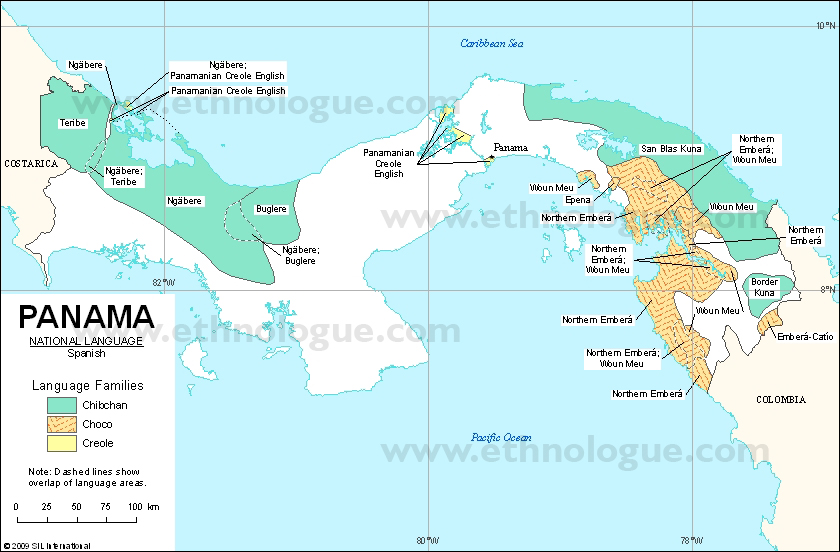
There is some concern over the survival of these indigenous languages and the lack of government support in continuing these languages longevity.
https://www.frommers.com/destinations/panama/in-depth/language
Panama has been a member of the World Trade organization since 1997, a member of the International Monetary Fund since 1946, and a member of the United Nations since its conception. It works with the UN Security council but has been on and off during different government administrations.
https://www.wto.org/english/thewto_e/countries_e/panama_e.htm
https://www.un.org/securitycouncil/content/panama
https://www.imf.org/en/Countries/PAN
One major concern is Panama this week is the planned exhumation of civilians who were fatalities during the United States' invasion of the country in the eighties. Many people are concerned with what the results are going to be, however it is probable that the findings will bring peace and closure to many families that were victims of the invasion.
The official and most widely spoken language in Panama is Spanish, however there are numerous indigenous languages and dialects that are also prevalent throughout the country: Wounaan, Teribe, Emberá, Kuna, and Ngöbe-Buglé are all languages spoken by indigenous groups in the small Central American nation. Guari Guari is another widely spoken language, and is considered a creole language combining elements of English brought over by Jamaican settlers and local indigenous dialects.
There is some concern over the survival of these indigenous languages and the lack of government support in continuing these languages longevity.
https://www.frommers.com/destinations/panama/in-depth/language
Panama has been a member of the World Trade organization since 1997, a member of the International Monetary Fund since 1946, and a member of the United Nations since its conception. It works with the UN Security council but has been on and off during different government administrations.
https://www.wto.org/english/thewto_e/countries_e/panama_e.htm
https://www.un.org/securitycouncil/content/panama
https://www.imf.org/en/Countries/PAN
One major concern is Panama this week is the planned exhumation of civilians who were fatalities during the United States' invasion of the country in the eighties. Many people are concerned with what the results are going to be, however it is probable that the findings will bring peace and closure to many families that were victims of the invasion.
Post #1

On January 17, 2020, in Tegucigalpa, the capital of Honduras, national lawmakers extended an anti corruption mission according to this Associated Press article. The name of the mission is the "Mission to Support the Fight against Corruption and Impunity in Honduras", and it's goal was to uncover the misuse of public funds. This mission was supposed to end January 12th, 2020, but according to the Honduran government's statement, "We did not reach a consensus on signing a new covenant between Honduras and the Organization of American States secretary general." This commission was established by the Honduran president Juan Orlando Hernandez in 2015 because the public demanded that he resign after it was revealed that millions of dollars for the country's social security system were unjustly held. This commission was composed of international lawyers and investigators was to be active for four years. During these four years, the commission found that, "...networks of legislative and non-profit front organizations that moved public monies back into lawmakers’ pockets."(Gonzales, Sherman) In essence, when the commission found this out, it angered the country's lawmakers and they "...threw up hurdles to prevent the country's prosecutors from advancing the cases. They also reduced legal sentences for corruption-related crimes and essentially blocked the Attorney General's Office from investigation improper use of public funds for up to seven years." Keep in mind that this commission was only supposed to last for four years. Omar Rivera, the head of the Association for a More Just Society, and Adriana Beltran, the director of citizen security and the Washington Office on Latin America, a human rights organization, were both widely discouraged with the end of this commission. The former President Mel Zelaya, removed from office in 2009, stated "...as long as that dictatorship is governing the country, Honduras has no hope of moving forward" and encouraged citizens to protest in front of the commission's offices on January 27th, 2020. The general public already disliked President Hernandez because he was able to overcome a constitutional ban on re-election and was re-elected in 2017. Also, his bother Tony Hernandez was found guilty for cocaine trafficking in a US federal court. US prosecutors stated that the president was involved in the criminal act which he denied.

According to the 2019 free state index, Honduras's freedom score is 60.2 which puts its economy at 93rd freest in the world. It is ranked below Montenegro and above Tanzania. Rule of law, government size, regulatory efficiency, and open markets are four categories (each with three subcategories) that are all ranked from zero to one hundred and then averaged. In the Americas region, Honduras is ranked 20th among the 32 countries in this region. Its score of 60.2 is above the Americas' regional average, but below the world's average score. As stated before, the country is riddled with Systemic corruption which contributes to the country's low score.
According to the 2019 fragile states index, Honduras is ranked 64th out of 178 countries with the score of 77.8. It moved up in rank by four points compared to year before (2018). Out of ten, the average of Honduras's economic, cohesion, political, and social indicator trends, which are also each divided into three categories, is 6.5.
Here are some general facts about Honduras:
- It is Central America's second poorest country
- Has one of the world's highest homicide rates
- The top individual income and corporate tax rates are 25 percent
- The population of Honduras is predicted to be 9,235,340 in July of 2020
- It's unemployment rate is 4.5%
- Became an independent nation in 1821
- The most common religion of the country is Roman Catholic.
Post #2

The United Nations Refugee Agency has given Assistance to Costa Rica to help Nicaraguan Migrants
On Friday, February 7th, 2019, The United Nations Refugee Agency (UNHCR) announced that they will be giving 4.1 million dollars to Costa Rica to help the country with asylum seekers from Nicaragua. The people of Nicaragua are fleeing because of the continued gross misuse of power by President Daniel Ortega. Ortega took power in 2007 and has since been dismantling all restrictions on his power. People have been protesting this human rights atrocity. The government has been violently repressing these protests. That is the main cause of people fleeing to seek asylum. According to official data from the Costa Rican government, there are around 87,000 asylum seekers in Costa Rica with 80% of those being Nicaraguans.
Teen Obesity on the Rise
A new study from the Health Ministry of Costa Rica has revealed that upwards of 30% of teenagers are considered overweight or obese. The Minister of Health had this to say about the results of the new study "Adolescence is an important stage of life that offers a perspective for the adoption of future habits." he continued with “The results of this study are important because they give us an approach to food consumption habits and physical activity levels of adolescents at the national level, which allows us to determine where to direct the possible initiatives by correcting habits brought from childhood and thus mitigating the negative effects on their health.”
According to the World Health Organization, worldwide obesity has tripled since 1975. Costa Rica's children are a bit ahead of the curve of the rest of the world at their 30% mark, but it seems that the government is setting up plans to help bring that number down after the revelation of this new study.
Worst Fiscal Deficit in Decades registered for 2019
Costa Rica has recorded a fiscal deficit of 6.9% of GDP. That is the highest percent in over 30 years. The Minister of finance foretasted a deficit of 6.2% at the beginning of the year, but said that payment of interest of public debt was the cause for the larger than predicted number. He further explained "In a country that collects 13% of GDP in taxes, 49% of what the State collects goes in interest payments. It is essential to exchange expensive debt for cheap debt,"
Costa Rica Ranked one of Top Healthcare Nations
In an article from the Global Retirement Index, Costa Rica ranked 3rd in world for best Healthcare. Costa Rica's healthcare ranked so high because of their two systems. The Government run public healthcare and the private run healthcare. Both systems are very accessible to all citizens. this coupled with the constant advancements to equipment and clinics are the reason Costa Rica has ranked so high
Even with all of these advancements, the prices are low compared to nations like The United States. The top two spots of the list went to Spain and Portugal.
Central America Ferry Could be done by July
A ferry from Costa Rica to El Salvador has been in the works since 2018 and might finally be completed in July of this year. The Costa Rican Government has been heavily promoting the work between Caldera Port Corporations and the Ministry of Agriculture and Livestock to get this finished. It is estimated that the ferry can hold as many up to 100 container trucks and would play a big role in lowering good prices by reducing transit times from other Central American Countries. This ferry line would work as an alternate to the current route that has been deemed inefficient by all parties involved.
Saturday, February 8, 2020
Post #2
I.
The official languages in Puerto Rico are English and
Spanish. Linguistically Spanish is a Romance language while English is a North
Sea Germanic language. Between the two,
Spanish is the most influential langue.
Along with the two principal languages,
some other non-indigenous languages are spoken, primarily by immigrants. These
languages include French, German, Italian, Chinese, Haitian-Creole, and Hindi.
Some of these languages are taught in several colleges and universities across
the island.
The Taino language was the
widely spoken language before the Spanish occupation. The language was however
declared extinct in the 19th century. Elements of the language, however, exist
in the unique Spanish dialect of Puerto Ricans. Revival programs across
the country are seeking to popularize the language. Research also shows a rise
in the number of people who identify with the Taino ancestry. As it stands,
Puerto Ricans speak non-indigenous languages.
II.
Puerto Rico joined
United Nation on November 27, 1953. The nation is mainly helped by the
organization, and the UN recently promised humanitarian assistance from the
earthquake. Influences are very insignificant within the organization and are
unlikely to increase in the future.
Puerto Rico is not an International
Monetary Fund member country that can directly draw on that institution’s
financial resources or its technical assistance. Puerto Rico is not a member of
the World Trade Organization, either.
The Gini coefficient is 0.54 in 2019,
about 0.05 higher than the U.S. Quite high. The gap between the rich and the poor
is enormous, although the Caribbean is not an economically poor area (except
Haiti) but a narrow island.

The Gross Domestic Product per capita in
Puerto Rico was last recorded at 35085.30 US dollars in 2018 (60th
in the world), when adjusted by purchasing power parity. GDP based on purchasing
power is higher than in Italy. The main industry is pharmaceutical or electronic. The
GDP per Capita, in Puerto Rico, when adjusted by PPP is equivalent to 197
percent of the world’s average.
Source = https://www.un.org/en/, https://www.imf.org/external/index.htm,
https://www.wto.org/, https://www.usnews.com/opinion/economic-intelligence/articles/2017-12-04/us-should-ask-imf-for-help-with-puerto-rico, https://datausa.io/profile/geo/puerto-rico/, https://tradingeconomics.com/puerto-rico/gdp-per-capita-ppp
III.
News of the earthquake that hit the country in January is still dominating.
The residents of Puerto Rico, which had about four earthquakes in the first
week of the month, are still suffering. More recently, the government’s inadequate
response to natural disasters has been weighed down by public opinion.

People reach out to receive supplies after a warehouse with supplies believed to have been from when Hurricane Maria struck
In a
video released by a citizen, there were a lot of unused relief items in the
warehouse. The citizens piled up protective items such as beds, water, and towels
that they needed right away in the warehouse and did not distribute them to the
victims. Protests against the President of the city are intensifying.
Source = https://www.axios.com/
Subscribe to:
Comments (Atom)